AI Email Generator Email

AI Email Generator Email — independent reviews, comparisons, pricing and step-by-step guides on Aizhi.

  • IBM ALP

    IBM ALP

    IBM Assembly Language Processor (ALP) is an assembler written by IBM for 32-bit OS/2 Warp (OS/2 3.0), which was released in 1994. ALP accepts source programs compatible with Microsoft Macro Assembler (MASM) version 5.1, which was originally used to build many of the device drivers included with OS/2. For OS/2 versions 3 and 4, ALP was distributed, along with other tools and documentation, as part of the Device Driver Kit (DDK). The DDK was withdrawn in 2004 as part of IBM's discontinuance of OS/2.

    Read more →
  • Lawbot

    Lawbot

    Lawbots are a broad class of customer-facing legal AI applications that are used to automate specific legal tasks, such as document automation and legal research. The terms robot lawyer and lawyer bot are used as synonyms to lawbot. A robot lawyer or a robo-lawyer refers to a legal AI application that can perform tasks that are typically done by paralegals or young associates at law firms. However, there is some debate on the correctness of the term. Some commentators say that legal AI is technically speaking neither a lawyer nor a robot and should not be referred to as such. Other commentators believe that the term can be misleading and note that the robot lawyer of the future will not be one all-encompassing application but a collection of specialized bots for various tasks. Lawbots use various artificial intelligence techniques or other intelligent systems to limit humans' direct ongoing involvement in certain steps of a legal matter. The user interfaces on lawbots vary from smart searches and step-by-step forms to chatbots. Consumer and enterprise-facing lawbot solutions often do not require direct supervision from a legal professional. Depending on the task, some client-facing solutions used at law firms operate under an attorney supervision. == Levels of autonomy == The following levels of autonomy (LoA) are suggested for automated AI legal reasoning: Level 0 (LoA0): No automation for AI legal reasoning Level 1 (LoA1): Simple assistance automation Level 2 (LoA2): Advanced assistance automation Level 3 (LoA3): Semi-autonomous automation Level 4 (LoA4): Domain automation Level 5 (LoA5): Fully-autonomous automation Level 6 (LoA6): Superhuman automation == Examples == Some legal AI solutions are developed and marketed directly to the customers or consumers, whereas other applications are tools for the attorneys at law firms. There are already hundreds of legal AI solutions that operate in multitude of ways varying in sophistication and dependence on scripted algorithms. One notable legal technology chatbot application is DoNotPay. It had started off as an app for contesting parking tickets, but has since expanded to include features that help users with many different types of legal issues, ranging from consumer protection to immigration rights and other social issues. == Impact on the legal industry == In the 2016 report, Deloitte estimated that more than 110,000 law jobs in just the United Kingdom alone could disappear within the next twenty years due to automation. This change could result in the creation of more highly skilled jobs and in the reduction of paralegal and temporary positions. Deloitte's report asserts that "there is significant potential for high-skilled roles that involve repetitive processes to be automated by smart and self-learning algorithms". According to Lawyers to Engage, between 22% of a lawyer’s work and 35% of a legal assistant’s work can be automated in the US. Top law schools like Harvard have already begun to integrate Artificial Intelligence into the curriculum. Legal tech start-up companies have begun developing applications that assist law firms with completing low-risk legal processes. These applications can enable lawyers to focus on more work that requires their specific expertise. The automation of processes like contract reviewing, enforcement of negotiations (smart contracts) and client intake (expert systems) allows law firms to streamline their procedures and improve efficiency. In addition, automation benefits small-to-medium law firms that do not have the resources to utilize junior talent on such routine tasks. The increase of law firms utilizing automated applications could result into legal tech becoming a necessity in the industry. Digital Reason CEO, Tim Estes, stated that those who refuse the opportunity to integrate AI in their workflow are “most at risk.” In 2018, Forbes reported a 713% increase in investments in legal tech. This rapid growth is reflective of law firms beginning to “cede business to… new model legal providers… that meld technological, business and legal expertise.” == Access to law and justice == It has been widely estimated for at least the last generation that all the programs and resources devoted to ensuring access to justice address only 20% of the civil legal needs of low-income people in the United States. Drawing on this experience, in late 2011, the U.S. government-funded Legal Services Corporation decided to convene a summit of leaders to explore how best to use technology in the access-to-justice community. The group adopted a mission for The Summit on the Use of Technology to Expand Access to Justice (Summit) consistent with the magnitude of the challenge: "to explore the potential of technology to move the United States toward providing some form of effective assistance to 100% of persons otherwise unable to afford an attorney for dealing with essential civil legal needs". In April 2017, joined by Microsoft and Pro Bono Net, the Legal Services Corporation (LSC) announced a pilot program to develop online, statewide legal portals to direct individuals with civil legal needs to the most appropriate forms of assistance. == Technological limitations == Current research in subjects such as computational privacy, explainable machine learning, Bayesian deep learning, knowledge-intensive machine learning, and transfer learning reveals that we do not yet have the technology to enable Level 4 to 6 AI lawbots. In 2023, OpenLaw began developing a model called Law Bot, which interacts in a conversational way as an attorney. The dialogue format makes it possible for Law Bot to answer follow-up questions, challenge incorrect premises, and reject inappropriate requests. Currently, they try to ensure it is in full compliance with all laws and regulations while conducting further beta testing before releasing it to the general public.

    Read more →
  • Image subtraction

    Image subtraction

    Image subtraction or pixel subtraction or difference imaging is an image processing technique whereby the digital numeric value of one pixel or whole image is subtracted from another image, and a new image generated from the result. This is primarily done for one of two reasons – levelling uneven sections of an image such as half an image having a shadow on it, or detecting changes between two images. This method can show things in the image that have changed position, brightness, color, or shape. For this technique to work, the two images must first be spatially aligned to match features between them, and their photometric values and point spread functions must be made compatible, either by careful calibration, or by post-processing (using color mapping). The complexity of the pre-processing needed before differencing varies with the type of image, but is essential to ensure good subtraction of static features. This is commonly used in fields such as time-domain astronomy (known primarily as difference imaging) to find objects that fluctuate in brightness or move. In automated searches for asteroids or Kuiper belt objects, the target moves and will be in one place in one image, and in another place in a reference image made an hour or day later. Thus, image processing algorithms can make the fixed stars in the background disappear, leaving only the target. Distinct families of astronomical image subtraction techniques have emerged, operating in both image space or frequency space, with distinct trade-offs in both quality of subtraction and computational cost. These algorithms lie at the heart of almost all modern (and upcoming) transient surveys, and can enable the detection of even faint supernovae embedded in bright galaxies. Nevertheless, in astronomical imaging, significant 'residuals' remain around bright, complex sources, necessitating further algorithmic steps to identify candidates (known as real-bogus classification) The Hutchinson metric can be used to "measure of the discrepancy between two images for use in fractal image processing".

    Read more →
  • Sub-pixel resolution

    Sub-pixel resolution

    In digital image processing, sub-pixel resolution can be obtained in images constructed from sources with information exceeding the nominal pixel resolution of said images. == Example == For example, if the image of a ship of length 50 metres (160 ft), viewed side-on, is 500 pixels long, the nominal resolution (pixel size) on the side of the ship facing the camera is 0.1 metres (3.9 in). Now sub-pixel resolution of well resolved features can measure ship movements which are an order of magnitude (10×) smaller. Movement is specifically mentioned here because measuring absolute positions requires an accurate lens model and known reference points within the image to achieve sub-pixel position accuracy. Small movements can however be measured (down to 1 cm) with simple calibration procedures. Specific fit functions often suffer specific bias with respect to image pixel boundaries. Users should therefore take care to avoid these "pixel locking" (or "peak locking") effects. == Determining feasibility == Whether features in a digital image are sharp enough to achieve sub-pixel resolution can be quantified by measuring the point spread function (PSF) of an isolated point in the image. If the image does not contain isolated points, similar methods can be applied to edges in the image. It is also important when attempting sub-pixel resolution to keep image noise to a minimum. This, in the case of a stationary scene, can be measured from a time series of images. Appropriate pixel averaging, through both time (for stationary images) and space (for uniform regions of the image) is often used to prepare the image for sub-pixel resolution measurements.

    Read more →
  • Pedagogical agent

    Pedagogical agent

    A pedagogical agent is a concept borrowed from computer science and artificial intelligence and applied to education, usually as part of an intelligent tutoring system (ITS). It is a simulated human-like interface between the learner and the content, in an educational environment. A pedagogical agent is designed to model the type of interactions between a student and another person. Mabanza and de Wet define it as "a character enacted by a computer that interacts with the user in a socially engaging manner". A pedagogical agent can be assigned different roles in the learning environment, such as tutor or co-learner, depending on the desired purpose of the agent. "A tutor agent plays the role of a teacher, while a co-learner agent plays the role of a learning companion". == History == The history of Pedagogical Agents is closely aligned with the history of computer animation. As computer animation progressed, it was adopted by educators to enhance computerized learning by including a lifelike interface between the program and the learner. The first versions of a pedagogical agent were more cartoon than person, like Microsoft's Clippy which helped users of Microsoft Office load and use the program's features in 1997. However, with developments in computer animation, pedagogical agents can now look lifelike. By 2006 there was a call to develop modular, reusable agents to decrease the time and expertise required to create a pedagogical agent. There was also a call in 2009 to enact agent standards. The standardization and re-usability of pedagogical agents is less of an issue since the decrease in cost and widespread availability of animation tools. Individualized pedagogical agents can be found across disciplines including medicine, math, law, language learning, automotive, and armed forces. They are used in applications directed to every age, from preschool to adult. == Learning theories related to pedagogical agent design == === Distributed cognition theory === Distributed cognition theory is the method in which cognition progresses in the context of collaboration with others. Pedagogical agents can be designed to assist the cognitive transfer to the learner, operating as artifacts or partners with collaborative role in learning. To support the performance of an action by the user, the pedagogical agent can act as a cognitive tool as long as the agent is equipped with the knowledge that the user lacks. The interactions between the user and the pedagogical agent can facilitate a social relationship. The pedagogical agent may fulfill the role of a working partner. === Socio-cultural learning theory === Socio-cultural learning theory is how the user develops when they are involved in learning activities in which there is interaction with other agents. A pedagogical agent can: intervene when the user requests, provide support for tasks that the user cannot address, and potentially extend the learners cognitive reach. Interaction with the pedagogical agent may elicit a variety of emotions from the learner. The learner may become excited, confused, frustrated, and/or discouraged. These emotions affect the learners' motivation. === Extraneous Cognitive Load === Extraneous cognitive load is the extra effort being exerted by an individual's working memory due to the way information is being presented. A pedagogical agent can increase the user's cognitive load by distracting them and becoming the focus of their attention, causing split attention between the instructional material and the agent. Agents can reduce the perceived cognitive load by providing narration and personalization that can also promote a user's interest and motivation. While research on the reduction of cognitive load from pedagogical agents is minimal, more studies have shown that agents do not increase it. == Effectiveness == It has been suggested by researchers that pedagogical agents may take on different roles in the learning environment. Examples of these roles are: supplanting, scaffolding, coaching, testing, or demonstrating or modelling a procedure. A pedagogical agent as a tutor has not been demonstrated to add any benefit to an educational strategy in equivalent lessons with and without a pedagogical agent. According to Richard Mayer, there is some support in research for pedagogical agent increasing learning, but only as a presenter of social cues. A co-learner pedagogical agent is believed to increase the student's self-efficacy. By pointing out important features of instructional content, a pedagogical agent can fulfill the signaling function, which research on multimedia learning has shown to enhance learning. Research has demonstrated that human-human interaction may not be completely replaced by pedagogical agents, but learners may prefer the agents to non-agent multimedia systems. This finding is supported by social agency theory. Much like the varying effectiveness of the pedagogical agent roles in the learning environment, agents that take into account the user's affect have had mixed results. Research has shown pedagogical agents that make use of the users’ affect have been found to increase user knowledge retention, motivation, and perceived self-efficacy. However, with such a broad range of modalities in affective expressions, it is often difficult to utilize them. Additionally, having agents detect a user's affective state with precision remains challenging, as displays of affect are different across individuals. == Design == === Attractiveness === The appearance of a pedagogical agent can be manipulated to meet the learning requirements. The attractiveness of a pedagogical agent can enhance student's learning when the users were the opposite gender of the pedagogical agent. Male students prefer a sexy appearance of a female pedagogical agents and dislike the sexy appearance of male agents. Female students were not attracted by the sexy appearance of either male or female pedagogical agents. === Affective Response === Pedagogical agents have reached a point where they can convey and elicit emotion, but also reason about and respond to it. These agents are often designed to elicit and respond to affective actions from users through various modalities such as speech, facial expressions, and body gestures. They respond to the affective state of the given user, and make use of these modalities using a wide array of sensors incorporated into the design of the agent. Specifically in education and training applications, pedagogical agents are often designed to increasingly recognize when users or learners exhibit frustration, boredom, confusion, and states of flow. The added recognition in these agents is a step toward making them more emotionally intelligent, comforting and motivating the users as they interact. === Digital Representation === The design of a pedagogical agent often begins with its digital representation, whether it will be 2D or 3D and static or animated. Several studies have developed pedagogical agents that were both static and animated, then evaluated the relative benefits. Similar to other design considerations, the improved learning from static or animated agents remains questionable. One study showed that the appearance of an agent portrayed using a static image can impact a user's recall, based on the visual appearance. Other research found results that suggest static agent images improve learning outcomes. However, several other studies found user's learned more when the pedagogical agent was animated rather than static. Recently a meta-analysis of such research found a negligible improvement in learning via pedagogical agents, suggesting more work needs to be done in the area to support any claims.

    Read more →
  • DAVI

    DAVI

    The Dutch Automated Vehicle Initiative (DAVI) is a research and demonstration initiative developing automated vehicles for use on public roads. The project is unique in that, besides simply making driverless cars, it also focuses on having automated vehicles share information among each other. The aim is to have the cars help to avoid traffic congestion by reducing the safety distance between the cars (from 2 seconds to 0.5 seconds) and avoiding sudden traffic slow-downs due to maneuvers undertaken by drivers.

    Read more →
  • Motor theory of speech perception

    Motor theory of speech perception

    The motor theory of speech perception is the hypothesis that people perceive spoken words by identifying the vocal tract gestures with which they are pronounced rather than by identifying the sound patterns that speech generates. It originally claimed that speech perception is done through a specialized module that is innate and human-specific. Though the idea of a module has been qualified in more recent versions of the theory, the idea remains that the role of the speech motor system is not only to produce speech articulations but also to detect them. The hypothesis has gained more interest outside the field of speech perception than inside. This has increased particularly since the discovery of mirror neurons that link the production and perception of motor movements, including those made by the vocal tract. The theory was initially proposed in the Haskins Laboratories in the 1950s by Alvin Liberman and Franklin S. Cooper, and developed further by Donald Shankweiler, Michael Studdert-Kennedy, Ignatius Mattingly, Carol Fowler and Douglas Whalen. == Origins and development == The hypothesis has its origins in research using pattern playback to create reading machines for the blind that would substitute sounds for orthographic letters. This led to a close examination of how spoken sounds correspond to the acoustic spectrogram of them as a sequence of auditory sounds. This found that successive consonants and vowels overlap in time with one another (a phenomenon known as coarticulation). This suggested that speech is not heard like an acoustic "alphabet" or "cipher," but as a "code" of overlapping speech gestures. === Associationist approach === Initially, the theory was associationist: infants mimic the speech they hear and that this leads to behavioristic associations between articulation and its sensory consequences. Later, this overt mimicry would be short-circuited and become speech perception. This aspect of the theory was dropped, however, with the discovery that prelinguistic infants could already detect most of the phonetic contrasts used to separate different speech sounds. === Cognitivist approach === The behavioristic approach was replaced by a cognitivist one in which there was a speech module. The module detected speech in terms of hidden distal objects rather than at the proximal or immediate level of their input. The evidence for this was the research finding that speech processing was special such as duplex perception. === Changing distal objects === Initially, speech perception was assumed to link to speech objects that were both the invariant movements of speech articulators the invariant motor commands sent to muscles to move the vocal tract articulators This was later revised to include the phonetic gestures rather than motor commands, and then the gestures intended by the speaker at a prevocal, linguistic level, rather than actual movements. === Modern revision === The "speech is special" claim has been dropped, as it was found that speech perception could occur for nonspeech sounds (for example, slamming doors for duplex perception). === Mirror neurons === The discovery of mirror neurons has led to renewed interest in the motor theory of speech perception, and the theory still has its advocates, although there are also critics. == Support == === Nonauditory gesture information === If speech is identified in terms of how it is physically made, then nonauditory information should be incorporated into speech percepts even if it is still subjectively heard as "sounds". This is, in fact, the case. The McGurk effect shows that seeing the production of a spoken syllable that differs from an auditory cue synchronized with it affects the perception of the auditory one. In other words, if someone hears "ba" but sees a video of someone pronouncing "ga", what they hear is different—some people believe they hear "da". People find it easier to hear speech in noise if they can see the speaker. People can hear syllables better when their production can be felt haptically. === Categorical perception === Using a speech synthesizer, speech sounds can be varied in place of articulation along a continuum from /bɑ/ to /dɑ/ to /ɡɑ/, or in voice onset time on a continuum from /dɑ/ to /tɑ/ (for example). When listeners are asked to discriminate between two different sounds, they perceive sounds as belonging to discrete categories, even though the sounds vary continuously. In other words, 10 sounds (with the sound on one extreme being /dɑ/ and the sound on the other extreme being /tɑ/, and the ones in the middle varying on a scale) may all be acoustically different from one another, but the listener will hear all of them as either /dɑ/ or /tɑ/. Likewise, the English consonant /d/ may vary in its acoustic details across different phonetic contexts (the /d/ in /du/ does not technically sound the same as the one in /di/, for example), but all /d/'s as perceived by a listener fall within one category (voiced alveolar plosive) and that is because "linguistic representations are abstract, canonical, phonetic segments or the gestures that underlie these segments." This suggests that humans identify speech using categorical perception, and thus that a specialized module, such as that proposed by the motor theory of speech perception, may be on the right track. === Speech imitation === If people can hear the gestures in speech, then the imitation of speech should be very fast, as in when words are repeated that are heard in headphones as in speech shadowing. People can repeat heard syllables more quickly than they would be able to produce them normally. === Speech production === Hearing speech activates vocal tract muscles, and the motor cortex and premotor cortex. The integration of auditory and visual input in speech perception also involves such areas. Disrupting the premotor cortex disrupts the perception of speech units such as plosives. The activation of the motor areas occurs in terms of the phonemic features which link with the vocal track articulators that create speech gestures. The perception of a speech sound is aided by pre-emptively stimulating the motor representation of the articulators responsible for its pronunciation . Auditory and motor cortical coupling is restricted to a specific range of neuronal firing frequency. === Perception-action meshing === Evidence exists that perception and production are generally coupled in the motor system. This is supported by the existence of mirror neurons that are activated both by seeing (or hearing) an action and when that action is carried out. Another source of evidence is that for common coding theory between the representations used for perception and action. == Criticisms == The motor theory of speech perception is not widely held in the field of speech perception, though it is more popular in other fields, such as theoretical linguistics. As three of its advocates have noted, "it has few proponents within the field of speech perception, and many authors cite it primarily to offer critical commentary".p. 361 Several critiques of it exist. === Multiple sources === Speech perception is affected by nonproduction sources of information, such as context. Individual words are hard to understand in isolation but easy when heard in sentence context. It therefore seems that speech perception uses multiple sources that are integrated together in an optimal way. === Production === The motor theory of speech perception would predict that speech motor abilities in infants predict their speech perception abilities, but in actuality it is the other way around. It would also predict that defects in speech production would impair speech perception, but they do not. However, this only affects the first and already superseded behaviorist version of the theory, where infants were supposed to learn all production-perception patterns by imitation early in childhood. This is no longer the mainstream view of motor-speech theorists. === Speech module === Several sources of evidence for a specialized speech module have failed to be supported. Duplex perception can be observed with door slams. The McGurk effect can also be achieved with nonlinguistic stimuli, such as showing someone a video of a basketball bouncing but playing the sound of a ping-pong ball bouncing. As for categorical perception, listeners can be sensitive to acoustic differences within single phonetic categories. As a result, this part of the theory has been dropped by some researchers. === Sublexical tasks === The evidence provided for the motor theory of speech perception is limited to tasks such as syllable discrimination that use speech units not full spoken words or spoken sentences. As a result, "speech perception is sometimes interpreted as referring to the perception of speech at the sublexical level. However, the ultimate goal of these studies is presumably to understand the neural processes supporting the ability to process spee

    Read more →
  • Game Jolt

    Game Jolt

    Game Jolt is a social community platform for video games, gamers and content creators. Founded by Yaprak and David DeCarmine, it is available on iOS, Android, and on the web and as a desktop app for Windows and Linux. Users share interactive content through a variety of formats including images, videos, live streams, chat rooms, and virtual events. == Features == === Crowd streaming === In 2021 Game Jolt revealed their own live streaming feature called Firesides. Firesides allowed multiple users to simultaneously livestream together with nearly no delay. The feature launched with a virtual concert showcasing its ability to accommodate multiple streamers. On October 16, 2023, Firesides were removed from Game Jolt. === Mobile app === Game Jolt Social by Game Jolt Inc. launched on both the Apple App Store and Google Play Store in March 2022. "It's clear to us that Gen Z is tired of generic social media and they want a place specifically for gaming that supports all types of content they're creating–art, videos, thoughts, and livestreams all in one place." said Game Jolt founder and CEO Yaprak DeCarmine, in a statement to VentureBeat. === Game API === The Game Jolt Application Programming Interface (usually known as the Game Jolt Game API) allows any developer using a game development platform that supports HTTP operations and MD5 or SHA-1. Game Jolt advertises that the API can: Create multiple "scoreboards" which collect high scores from players made publicly available on the game's profile and give user accounts EXP Award player's trophies which give user accounts EXP Store game data on Game Jolt's data servers Log whether a user is currently playing a game they're logged into via the GJAPI == Game jams and competitions == Game Jolt regularly hosts game jams where participants are encouraged to develop games for a chance to win prizes. They hosted their first game jam in 2009, Shocking Contest. In November 2014, Game Jolt announced the "Indies vs PewDiePie" game jam, partnering with the popular YouTuber Felix "PewDiePie" Kjellberg. Developers were given a weekend (21–24 November) to create a game with the theme of "fun to play, fun to watch" to suit the Let's Plays entertainment style. Users could rate entries afterwards until December 1 when the scores were counted up. The prize to the top 10 rated games was Felix playing the games on his channel as a means of promotion for the developers, although later he played other entries. One of the participants of the jam, now known as Outerminds Inc. was discovered and hired by PewDiePie to develop his mobile game, Legend of the Brofist. Game Jolt partnered with Felix, Sean "Jacksepticeye" McLoughlin and Mark "Markiplier" Fischbach to host "Indies vs Gamers" in July 2015. The requirements for entries were arcade games using the Game Jolt Game API highscore tables, to be made between the July 17–20 and the top 5 games were played on the partner's YouTube channels. Following the "Indies vs PewDiePie" game jam in 2014, Game Jolt released their internal jam hosting tools public for all users to use as a service, to create their own game jams that integrated with the main site. Today, Game Jolt focuses on hosting and co-hosting game competitions with established brands in order to bring monetary and educational opportunities to their users. On April 15, 2024, an announcement was made about a collaboration with Pocket Worlds for the "HighRise Game Jam". Pocket Worlds had sold NFTs up until roughly 2022, causing a community outburst. The situation was addressed, and the situation started to disperse. == Contests == == Events == Game Jolt hosts both physical and virtual events to entertain and prank its users, which consists of the following: == History == Game Jolt has supported independent creators with a central platform to manage their content and communities since its start in 2003. David DeCarmine began development of Game Jolt at the age of 14 for a group of hobbyists, making games and sharing on forums in an early iteration known as Holo World. The original intention was to create a platform for gamers where new games could be discoverable and quickly playable, and where feedback could be provided directly to the creators, allowing them to continue improving their games. In 2008, Game Jolt was registered as an LLC, then incorporated as Game Jolt Inc. in September 2020. A new site launched in 2015 featuring a responsive design, automated curation for both games and game news articles which weighs how recent a game was uploaded and how popular it is ("hot") and filtering options on game listings for platform, maturity rating and development status. In March 2022, Game Jolt launched a mobile application simultaneously on the Google Play Store and Apple App Store targeted at Gen Z gamers and creators. While in beta, the mobile app had 100,000 installs pre-launch. === Game store === Game Jolt continues to host a large library of independent games. Game developers can upload their games directly to the site to share or sell. They would allow distribution for downloadable games, later adding support for Adobe Flash, Unity and Java games which allowed support for browser based games. In February 2013, Game Jolt built support for browser-based HTML5 games as well. A user levelling system was released into public beta in April 2013, incorporating the GJAPI trophies and highscores, as well as site activity, to generate 'EXP' (experience points). Game Jolt Jams released in early 2014 as a service to allow users to create their own game jams that integrated with the main site. In April 2016, an online marketplace was announced and released the following month with an exclusive set of game titles, including Bendy and the Ink Machine, allowing developers to sell their games on the site. In January 2016, Game Jolt released source code of the client and site's front end on GitHub under MIT license. In January 2022, Game Jolt banned adult games from appearing on the site, stating in an email to developers that the site had become a "social media platform" and they "had to make decisions around the direction and future of the brand which has now included the removal of hosted games with explicitly adult content." In response to a tweet by Itch.io saying the site is not for prudes, they wrote in their own tweet: "Game Jolt is a platform with a large audience of 13-16 year olds. Our users asked us to clean up, so here we are." == Investments == After bootstrapping Game Jolt with revenue earned from ads on the website for years, the DeCarmines secured venture capital in 2020 from SoftBank, doing so again in 2021 from founders of Twitch, Rec Room, Modio and more.

    Read more →
  • Learning automaton

    Learning automaton

    A learning automaton is one type of machine learning algorithm studied since 1970s. Learning automata select their current action based on past experiences from the environment. It will fall into the range of reinforcement learning if the environment is stochastic and a Markov decision process (MDP) is used. == History == Research in learning automata can be traced back to the work of Michael Lvovitch Tsetlin in the early 1960s in the Soviet Union. Together with some colleagues, he published a collection of papers on how to use matrices to describe automata functions. Additionally, Tsetlin worked on reasonable and collective automata behaviour, and on automata games. Learning automata were also investigated by researches in the United States in the 1960s. However, the term learning automaton was not used until Narendra and Thathachar introduced it in a survey paper in 1974. == Definition == A learning automaton is an adaptive decision-making unit situated in a random environment that learns the optimal action through repeated interactions with its environment. The actions are chosen according to a specific probability distribution which is updated based on the environment response the automaton obtains by performing a particular action. With respect to the field of reinforcement learning, learning automata are characterized as policy iterators. In contrast to other reinforcement learners, policy iterators directly manipulate the policy π. Another example for policy iterators are evolutionary algorithms. Formally, Narendra and Thathachar define a stochastic automaton to consist of: a set X of possible inputs, a set Φ = { Φ1, ..., Φs } of possible internal states, a set α = { α1, ..., αr } of possible outputs, or actions, with r ≤ s, an initial state probability vector p(0) = ≪ p1(0), ..., ps(0) ≫, a computable function A which after each time step t generates p(t+1) from p(t), the current input, and the current state, and a function G: Φ → α which generates the output at each time step. In their paper, they investigate only stochastic automata with r = s and G being bijective, allowing them to confuse actions and states. The states of such an automaton correspond to the states of a "discrete-state discrete-parameter Markov process". At each time step t=0,1,2,3,..., the automaton reads an input from its environment, updates p(t) to p(t+1) by A, randomly chooses a successor state according to the probabilities p(t+1) and outputs the corresponding action. The automaton's environment, in turn, reads the action and sends the next input to the automaton. Frequently, the input set X = { 0,1 } is used, with 0 and 1 corresponding to a nonpenalty and a penalty response of the environment, respectively; in this case, the automaton should learn to minimize the number of penalty responses, and the feedback loop of automaton and environment is called a "P-model". More generally, a "Q-model" allows an arbitrary finite input set X, and an "S-model" uses the interval [0,1] of real numbers as X. A visualised demo/ Art Work of a single Learning Automaton had been developed by μSystems (microSystems) Research Group at Newcastle University. == Finite action-set learning automata == Finite action-set learning automata (FALA) are a class of learning automata for which the number of possible actions is finite or, in more mathematical terms, for which the size of the action-set is finite.

    Read more →
  • Escapex

    Escapex

    Escapex, stylized as escapex, was a mobile app developer specializing in white-label fan engagement apps for celebrities. It was founded by Sephi Shapira in 2014 and has raised $18 million in funding. It allows celebrities to reach fans directly, as well as receiving revenue from fans through its freemium model. == Overview == Shapira is Israeli and previously founded Interchan and MassiveImpact. He graduated from Ben-Gurion University of the Negev. The company has raised $18 million in funding. Its 2018 revenue was $5.5 million. In 2016, the company had 57 employees split between Tel Aviv and New York City. The company's General Manager is Joe Cuello, formerly an executive at MTV, then Chief Creative Officer at TuneCore. Their director of social engagement is Rafe Lopresti-Oakes. A press release from the company described the service as having a "proprietary loyalty program" which allows "monetization of social engagement through e-commerce and in-app advertising". App launches typically offered a contest for one fan to meet the celebrity. The app also allows Escapex to collect and monetize user profiles for advertising. The New York Times described the concept of Escapex, musing, "If people love you, why not make money from them?". == Notable apps == The company has created over 350 applications, including: Enrique Iglesias, June 2016 or earlier Akon, June 2016 or earlier Ricky Martin, June 2016 or earlier Rohan Marley and the Bob Marley estate, February 2017 Marc Anthony, March 2017 Prince Royce, March 2017 Jeremy Renner, March 2017, making over $35,000 per month in April 2019 Galen Gering, June 2017 Yandel, June 2017 Greg Vaughan, June 2017 Jason Thompson, June 2017 Niecy Nash, September 2017 Tyler Posey, September 2017 Osric Chau, January 2018 Chris D'Elia Alessandra Ambrosio, making over $35,000 per month in April 2019 Abigail Ratchford, making over $35,000 per month in April 2019 Amber Rose, making over $35,000 per month in April 2019 Dita Von Teese Tommy Chong === Bollywood stars === Escapex has a large roster of Bollywood celebrities, including: Sunny Leone, December 2016 Remo D'Souza, January 2017 Amy Jackson, March 2017 Kajal Aggarwal, March 2017 Nargis Fakhri, April 2017 Disha Patani Sonam Kapoor Salman Khan == Jeremy Renner app == Renner released a mobile app called "Jeremy Renner" (Android) and "Jeremy Renner Official" (iOS) in March 2017. FastCompany wrote extensively about Renner's app in April 2019, calling it "a surprising new kind of social media". The Ringer's Kate Knibbs, explaining how self-referential the app is, summarized it stating "Jeremy Renner’s Jeremy Renner app is the Jeremy Renner of apps." The community developed to include memes, selfies, and a "Happy Rennsday" event on Wednesdays. As early as October 2017 there were claims of censorship, bullying, and "contest-rigging". In September 2019, comedian Stefan Heck wrote about discovering that any replies through the app would appear as if they were sent by Renner himself in push notifications. Heck wrote about notifications making it appear Renner was a big enthusiast of "porno"; other users made it appear Renner was a big fan of Casey Anthony. Renner had to ask Escapex to shut down the app the following day, stating "The app has jumped the shark. Literally." In September 2020, comedian/writer Caroline Goldfarb and actress Sarah Ramos launched The Renner Files podcast, a six-part series investigating the Jeremy Renner app.

    Read more →
  • Spherical basis

    Spherical basis

    In pure and applied mathematics, particularly quantum mechanics and computer graphics and their applications, a spherical basis is the basis used to express spherical tensors. The spherical basis closely relates to the description of angular momentum in quantum mechanics and spherical harmonic functions. While spherical polar coordinates are one orthogonal coordinate system for expressing vectors and tensors using polar and azimuthal angles and radial distance, the spherical basis are constructed from the standard basis and use complex numbers. == In three dimensions == A vector A in 3D Euclidean space R3 can be expressed in the familiar Cartesian coordinate system in the standard basis ex, ey, ez, and coordinates Ax, Ay, Az: or any other coordinate system with associated basis set of vectors. From this extend the scalars to allow multiplication by complex numbers, so that we are now working in C 3 {\displaystyle \mathbb {C} ^{3}} rather than R 3 {\displaystyle \mathbb {R} ^{3}} . === Basis definition === In the spherical bases denoted e+, e−, e0, and associated coordinates with respect to this basis, denoted A+, A−, A0, the vector A is: where the spherical basis vectors can be defined in terms of the Cartesian basis using complex-valued coefficients in the xy plane: in which i {\displaystyle i} denotes the imaginary unit, and one normal to the plane in the z direction: e 0 = e z {\displaystyle \mathbf {e} _{0}=\mathbf {e} _{z}} The inverse relations are: === Commutator definition === While giving a basis in a 3-dimensional space is a valid definition for a spherical tensor, it only covers the case for when the rank k {\displaystyle k} is 1. For higher ranks, one may use either the commutator, or rotation definition of a spherical tensor. The commutator definition is given below, any operator T q ( k ) {\displaystyle T_{q}^{(k)}} that satisfies the following relations is a spherical tensor: [ J ± , T q ( k ) ] = ℏ ( k ∓ q ) ( k ± q + 1 ) T q ± 1 ( k ) {\displaystyle [J_{\pm },T_{q}^{(k)}]=\hbar {\sqrt {(k\mp q)(k\pm q+1)}}T_{q\pm 1}^{(k)}} [ J z , T q ( k ) ] = ℏ q T q ( k ) {\displaystyle [J_{z},T_{q}^{(k)}]=\hbar qT_{q}^{(k)}} === Rotation definition === Analogously to how the spherical harmonics transform under a rotation, a general spherical tensor transforms as follows, when the states transform under the unitary Wigner D-matrix D ( R ) {\displaystyle {\mathcal {D}}(R)} , where R is a (3×3 rotation) group element in SO(3). That is, these matrices represent the rotation group elements. With the help of its Lie algebra, one can show these two definitions are equivalent. D ( R ) T q ( k ) D † ( R ) = ∑ q ′ = − k k T q ′ ( k ) D q ′ q ( k ) {\displaystyle {\mathcal {D}}(R)T_{q}^{(k)}{\mathcal {D}}^{\dagger }(R)=\sum _{q'=-k}^{k}T_{q'}^{(k)}{\mathcal {D}}_{q'q}^{(k)}} === Coordinate vectors === For the spherical basis, the coordinates are complex-valued numbers A+, A0, A−, and can be found by substitution of (3B) into (1), or directly calculated from the inner product ⟨, ⟩ (5): A 0 = ⟨ e 0 , A ⟩ = ⟨ e z , A ⟩ = A z {\displaystyle A_{0}=\left\langle \mathbf {e} _{0},\mathbf {A} \right\rangle =\left\langle \mathbf {e} _{z},\mathbf {A} \right\rangle =A_{z}} with inverse relations: In general, for two vectors with complex coefficients in the same real-valued orthonormal basis ei, with the property ei·ej = δij, the inner product is: where · is the usual dot product and the complex conjugate must be used to keep the magnitude (or "norm") of the vector positive definite. == Properties (three dimensions) == === Orthonormality === The spherical basis is an orthonormal basis, since the inner product ⟨, ⟩ (5) of every pair vanishes meaning the basis vectors are all mutually orthogonal: ⟨ e + , e − ⟩ = ⟨ e − , e 0 ⟩ = ⟨ e 0 , e + ⟩ = 0 {\displaystyle \left\langle \mathbf {e} _{+},\mathbf {e} _{-}\right\rangle =\left\langle \mathbf {e} _{-},\mathbf {e} _{0}\right\rangle =\left\langle \mathbf {e} _{0},\mathbf {e} _{+}\right\rangle =0} and each basis vector is a unit vector: ⟨ e + , e + ⟩ = ⟨ e − , e − ⟩ = ⟨ e 0 , e 0 ⟩ = 1 {\displaystyle \left\langle \mathbf {e} _{+},\mathbf {e} _{+}\right\rangle =\left\langle \mathbf {e} _{-},\mathbf {e} _{-}\right\rangle =\left\langle \mathbf {e} _{0},\mathbf {e} _{0}\right\rangle =1} hence the need for the normalizing factors of 1 / 2 {\displaystyle 1/\!{\sqrt {2}}} . === Change of basis matrix === The defining relations (3A) can be summarized by a transformation matrix U: ( e + e − e 0 ) = U ( e x e y e z ) , U = ( − 1 2 − i 2 0 + 1 2 − i 2 0 0 0 1 ) , {\displaystyle {\begin{pmatrix}\mathbf {e} _{+}\\\mathbf {e} _{-}\\\mathbf {e} _{0}\end{pmatrix}}=\mathbf {U} {\begin{pmatrix}\mathbf {e} _{x}\\\mathbf {e} _{y}\\\mathbf {e} _{z}\end{pmatrix}}\,,\quad \mathbf {U} ={\begin{pmatrix}-{\frac {1}{\sqrt {2}}}&-{\frac {i}{\sqrt {2}}}&0\\+{\frac {1}{\sqrt {2}}}&-{\frac {i}{\sqrt {2}}}&0\\0&0&1\end{pmatrix}}\,,} with inverse: ( e x e y e z ) = U − 1 ( e + e − e 0 ) , U − 1 = ( − 1 2 + 1 2 0 + i 2 + i 2 0 0 0 1 ) . {\displaystyle {\begin{pmatrix}\mathbf {e} _{x}\\\mathbf {e} _{y}\\\mathbf {e} _{z}\end{pmatrix}}=\mathbf {U} ^{-1}{\begin{pmatrix}\mathbf {e} _{+}\\\mathbf {e} _{-}\\\mathbf {e} _{0}\end{pmatrix}}\,,\quad \mathbf {U} ^{-1}={\begin{pmatrix}-{\frac {1}{\sqrt {2}}}&+{\frac {1}{\sqrt {2}}}&0\\+{\frac {i}{\sqrt {2}}}&+{\frac {i}{\sqrt {2}}}&0\\0&0&1\end{pmatrix}}\,.} It can be seen that U is a unitary matrix, in other words its Hermitian conjugate U† (complex conjugate and matrix transpose) is also the inverse matrix U−1. For the coordinates: ( A + A − A 0 ) = U ∗ ( A x A y A z ) , U ∗ = ( − 1 2 + i 2 0 + 1 2 + i 2 0 0 0 1 ) , {\displaystyle {\begin{pmatrix}A_{+}\\A_{-}\\A_{0}\end{pmatrix}}=\mathbf {U} ^{\mathrm {} }{\begin{pmatrix}A_{x}\\A_{y}\\A_{z}\end{pmatrix}}\,,\quad \mathbf {U} ^{\mathrm {} }={\begin{pmatrix}-{\frac {1}{\sqrt {2}}}&+{\frac {i}{\sqrt {2}}}&0\\+{\frac {1}{\sqrt {2}}}&+{\frac {i}{\sqrt {2}}}&0\\0&0&1\end{pmatrix}}\,,} and inverse: ( A x A y A z ) = ( U ∗ ) − 1 ( A + A − A 0 ) , ( U ∗ ) − 1 = ( − 1 2 + 1 2 0 − i 2 − i 2 0 0 0 1 ) . {\displaystyle {\begin{pmatrix}A_{x}\\A_{y}\\A_{z}\end{pmatrix}}=(\mathbf {U} ^{\mathrm {} })^{-1}{\begin{pmatrix}A_{+}\\A_{-}\\A_{0}\end{pmatrix}}\,,\quad (\mathbf {U} ^{\mathrm {} })^{-1}={\begin{pmatrix}-{\frac {1}{\sqrt {2}}}&+{\frac {1}{\sqrt {2}}}&0\\-{\frac {i}{\sqrt {2}}}&-{\frac {i}{\sqrt {2}}}&0\\0&0&1\end{pmatrix}}\,.} === Cross products === Taking cross products of the spherical basis vectors, we find an obvious relation: e q × e q = 0 {\displaystyle \mathbf {e} _{q}\times \mathbf {e} _{q}={\boldsymbol {0}}} where q is a placeholder for +, −, 0, and two less obvious relations: e ± × e ∓ = ± i e 0 {\displaystyle \mathbf {e} _{\pm }\times \mathbf {e} _{\mp }=\pm i\mathbf {e} _{0}} e ± × e 0 = ± i e ± {\displaystyle \mathbf {e} _{\pm }\times \mathbf {e} _{0}=\pm i\mathbf {e} _{\pm }} === Inner product in the spherical basis === The inner product between two vectors A and B in the spherical basis follows from the above definition of the inner product: ⟨ A , B ⟩ = A + B + ⋆ + A − B − ⋆ + A 0 B 0 ⋆ {\displaystyle \left\langle \mathbf {A} ,\mathbf {B} \right\rangle =A_{+}B_{+}^{\star }+A_{-}B_{-}^{\star }+A_{0}B_{0}^{\star }}

    Read more →
  • FIRST Global Challenge

    FIRST Global Challenge

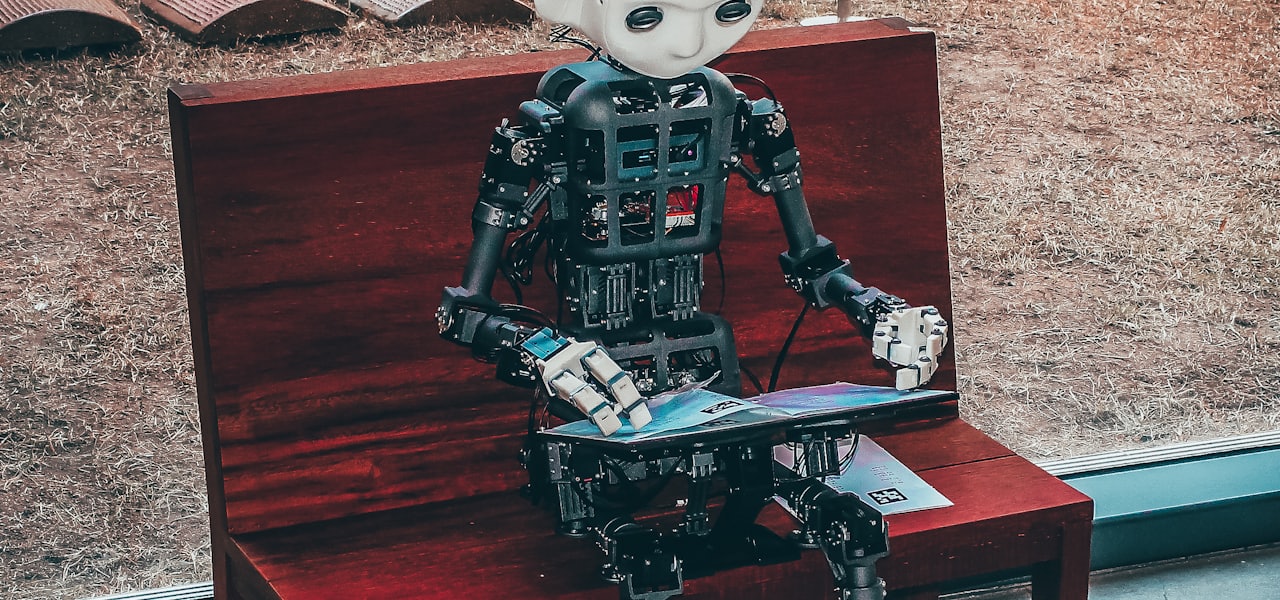
    The FIRST Global Challenge is a yearly robotics competition organized by the International First Committee Association. It promotes STEM education and careers for youth and was created by Dean Kamen in 2016 as an expansion of FIRST, an organization with similar objectives. == History == FIRST Global is a trade name for the International First Committee Association, a nonprofit corporation based in Manchester, New Hampshire, with a 501(c)(3) designation from the IRS. The nonprofit was founded by the co-founder of FIRST, Dean Kamen, with the objective of promoting STEM education and careers in the developing world through Olympics-style robotics competitions. Former US Congressman, Joe Sestak was the organization's president in 2017, but left after the 2017 Challenge. Each year, the FIRST Global Challenge is held in a different city. For example, Mexico City was selected to host the 2018 Challenge after the United States hosted the 2017 edition in Washington, DC. This is a change from FIRST's system of championships, where one city hosts for several years at a time. In May 2020, it was announced that FIRST Global would not host a traditional challenge in 2020 due to the COVID-19 pandemic and shifted to a remote model. One of the three champions were Team Bangladesh. In 2022, FIRST Global returned to in-person events with the 2022 Challenge in Geneva, Switzerland. == Editions == === Washington, D.C. 2017 === The 2017 FIRST Global Challenge was held in Washington, D.C., from July 16–18, and the challenge was the use of robots to separate different colored balls, representing clean water and impurities in water, symbolizing the Engineering Grand Challenge (based on the Millennium Development Goal) of improving access to clean water in the developing world. Around 160 teams composed of 15- to 18-year-olds from 157 countries participated, and around 60% of teams were created or led by young women. Six continental teams also participated. === Mexico City 2018 === The 2018 FIRST Global Challenge was held in Mexico City from August 15–18. The 2018 Challenge was called Energy Impact and explored the impact of various types of energy on the world and how they can be made more sustainable. In the challenge, robots worked together in teams of three to give cubes to human players, turn a crank, and score cubes in goals in order to generate electrical power. The challenge was based on three Engineering Grand Challenges; making solar energy affordable, making fusion energy a reality, and creating carbon sequestration methods. === Dubai 2019 === The 2019 challenge, called Ocean Opportunities, was held in Dubai from October 24–27 and was the first challenge hosted outside of North America. The challenge was themed around clearing the ocean of pollutants, and had two alliances of three teams each attempting to score large and small balls representing pollutants into processing areas and a processing barge. The processing barge had multiple levels, with higher levels worth more points. At the end of the match, robots "docked" with the barge by driving onto or climbing up it, with climbing worth more points. The event was opened by Sheikh Hamdan bin Mohammed Al Maktoum, Crown Prince of Dubai. === Geneva 2022 === The 2022 challenge called Carbon Capture, was held in Geneva from October 13–16. The challenge was themed around removing carbon dioxide (CO2) emissions from the atmosphere. In the Carbon Capture game, six different countries worked together to capture and store black balls representing carbon particles. The storage tower had multiple cantilevered bars that the robots mounted to, with the higher bars worth a greater multiplier. At the end of a match, robots "docked" on the storage tower's base or climbed the bars with their alliance indicator ball. Each match started with a "global alliance" of six countries, then divided into two "regional alliances" each consisting of three countries. The event was opened by Dr. Martina Hirayama, Switzerland State Secretary for Education, Research and Innovation (SERI). === Singapore 2023 === The 2023 challenge, called Hydrogen Horizons, was held in Singapore from October 7–10. The challenge is themed around renewable energy with a focus on hydrogen technologies. === Athens 2024 === The 2024 challenge was hosted in the Peace and Friendship Stadium in Attica, Greece. === Panama 2025 === The 2025 challenge, Eco Equilibrium, was hosted in the Panama Convention Centre in Panama City, Panama. == Subordinate programs == === Global STEM Corps === The Global STEM Corps is a FIRST Global initiative that connects qualified volunteer mentors with students in developing countries to prepare them for competitions. === New Technology Experience === The New Technology Experience (NTE) is an annual component of the FIRST Global Challenge that was added to the organization's offerings in 2021. It was established as a means for the student community to stay current with cutting-edge technology and is integrated with each year's theme. The 2021 NTE was the CubeSat Prototype Challenge. The 2022 NTE, Carbon Countermeasures, was presented in partnership with XPRIZE.

    Read more →
  • Crucible (software)

    Crucible (software)

    Crucible is a collaborative code review application by Australian software company Atlassian. Like other Atlassian products, Crucible is a Web-based application primarily aimed at enterprise, and certain features that enable peer review of a codebase may be considered enterprise social software. Crucible is particularly tailored to remote workers, and facilitates asynchronous review and commenting on code. Crucible also integrates with popular source control tools, such as Git and Subversion. Crucible is not open source, but customers are allowed to view and modify the code for their own use.

    Read more →
  • Comparison of video editing software

    Comparison of video editing software

    This is a comparison of non-linear video editing software applications. See also a more complete list of video editing software. == General information == This table gives basic general information about the different editors: === Active === === Discontinued / Inactive === ==== Definition ==== professional: used for full length Hollywood movies; professional (small): mainly used for paid commercials, short films or podcasts/YouTube channels; prosumer: Mainly targeting private use, anything that can do more than just trimming a film; basic: trimming a film; == System requirements == This table lists the operating systems that different editors can run on without emulation, as well as other system requirements. Note that minimum system requirements are listed; some features (like High Definition support) may be unavailable with these specifications. "Unix" includes the similar Linux, BSD and Unix-like operating systems. == High definition/High resolution import == The table below indicates the ability of each program to import various High Definition video or High resolution video formats for editing. == Feature set == == Output options == Please note that recording to Blu-ray does not imply 1080@50p/60p . Most only support up to 1080i 25/30 frames per second recording. Also not all formats can be output.

    Read more →
  • LCD crosstalk

    LCD crosstalk

    LCD crosstalk is a visual defect in an LCD screen which occurs because of interference between adjacent pixels. Owing to the way rows and columns in the display are addressed, and charge is pushed around, the data on one part of the display has the potential to influence what is displayed elsewhere. This is generally known as crosstalk, and in matrix displays typically occurs in the horizontal and vertical directions. Crosstalk used to be a serious problem in the old passive-matrix (STN) displays, but is rarely discernable in modern active-matrix (TFT) displays. A fortunate side effect of inversion (see above) is that, for most display material, what little crosstalk there is largely cancelled out. For most practical purposes, the level of crosstalk in modern LCDs is negligible. Certain patterns, particularly those involving fine dots, can interact with the inversion and reveal visible crosstalk. If you try moving a small Window in front of the inversion pattern (above) which makes your screen flicker the most, you may well see crosstalk in the surrounding pattern. Different patterns are required to reveal crosstalk on different displays (depending on their inversion scheme).

    Read more →